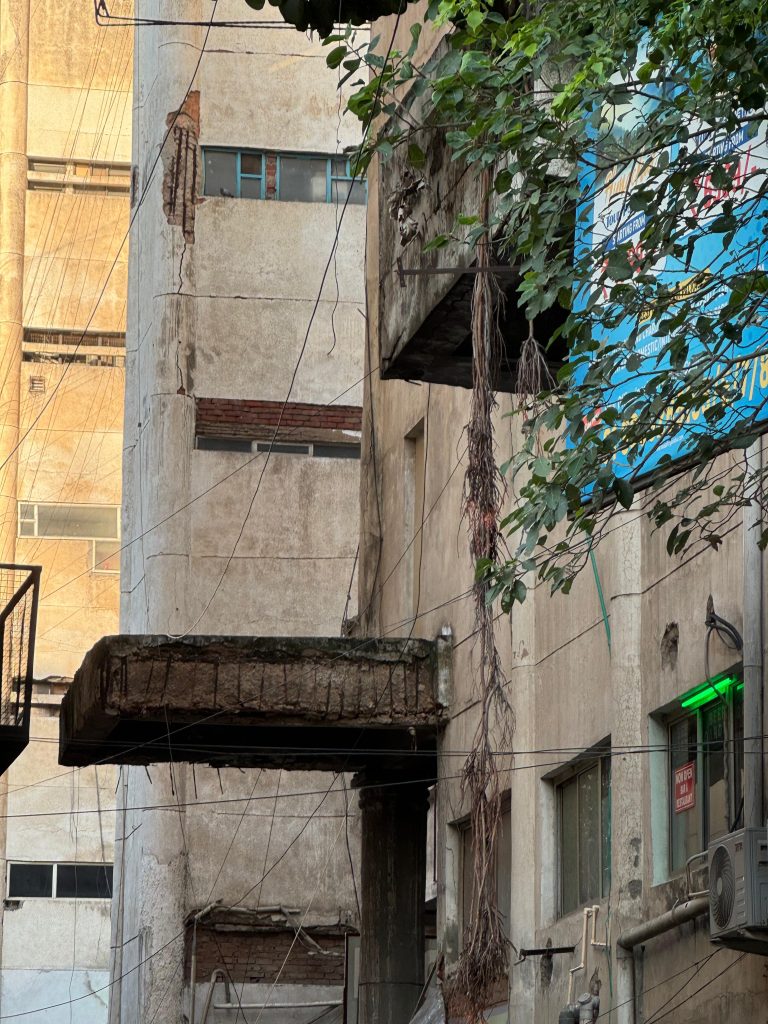
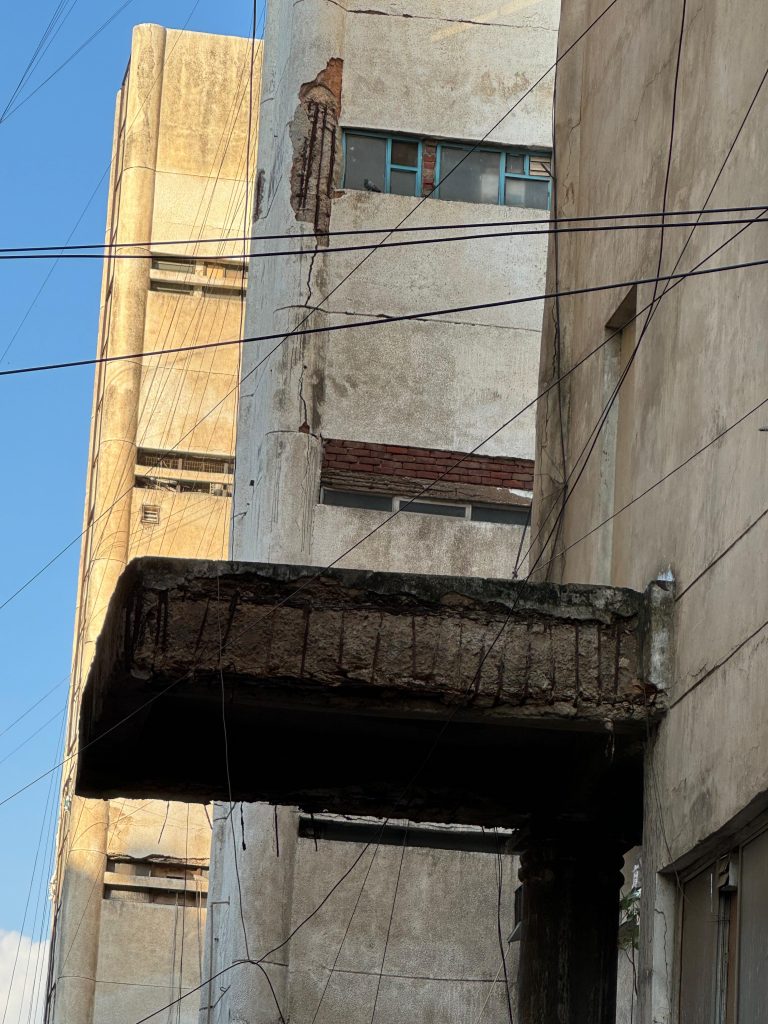
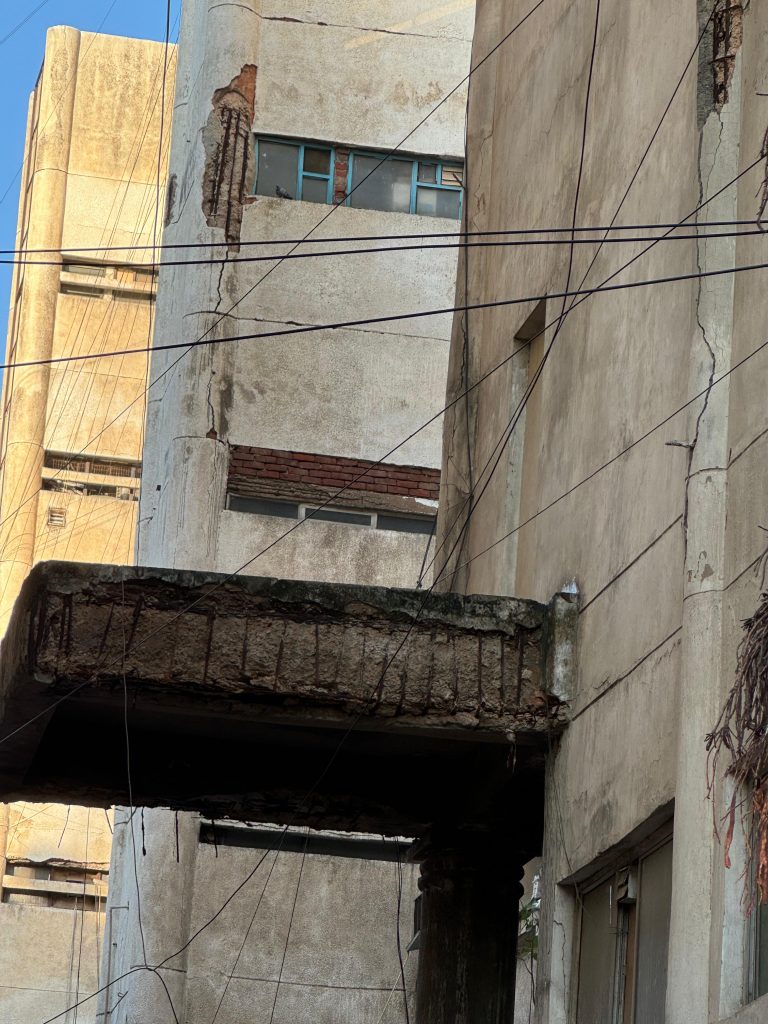
Visible decay on the Cinema side exposes years of neglect at Jaina Tower II
1. The scene in plain sight
The three photos above show a cantilevered slab that was ostensibly cast to shield the façade from Delhi’s monsoon downpours. Instead, it now illustrates everything that’s wrong with the tower’s upkeep:
- Exposed reinforcement: Steel rebars are visible where the concrete has crumbled away—a textbook sign of advanced spalling.
- Deep structural cracks: The adjoining wall, column and beam junctions all exhibit long vertical cracks that appear to track the reinforcement layout.
- Loose, dangling cables: Ad-hoc electrical and data lines drape across the slab like cobwebs, raising both electrocution and trip hazards.
- Vegetation & moisture streaks: Small plants and black algae on the soffit testify to chronic water ingress that accelerates corrosion.
This slab sits about three storeys above the service lane that leads to the Cinema. Any chunk of concrete shearing off here would fall directly onto pedestrians, two-wheelers and street-level shop entrances.
2. How did it get this bad?
| Failure point | What we see | Why it matters |
|---|---|---|
| Poor cover and compaction | Ribbed reinforcement visible along both faces | Inadequate concrete cover lets rainwater reach steel, causing rust that expands 2–4 × its original volume and cracks the surrounding concrete. |
| Absent waterproofing | Efflorescence and calcite trails on the beam | A ‘rain-guard’ without waterproofing is little more than a time-bomb: moisture infiltrates every season and freezes/expands in winter nights. |
| Lack of preventive maintenance | No signs of patch repair, epoxy injection or re-bar treatment | Regular inspection and minor repairs every 5 years could have arrested damage for a fraction of today’s cost and risk. |
3. Legal & safety implications
- National Building Code (NBC) Part 6 – Structural Design mandates periodic inspection and repair of exposed structural elements, especially cantilever projections.
- Delhi Building Bye-Laws 2016, Clause 7.27 empowers the municipal corporation to declare any structure “unsafe” and issue notices for immediate remedial action—or demolition.
- Indian Penal Code § 336/337/338 holds owners and occupiers criminally liable for endangering life through negligent construction or maintenance. A falling concrete chunk that injures someone can swiftly escalate from a civil claim to a criminal case.
4. What residents and shopkeepers can (and should) do now
- Document the danger: Photograph and date-stamp deteriorated spots from street level every month. Consistent visual evidence carries weight with authorities.
- File a joint complaint: Under Section 195 of the Delhi Municipal Corporation Act, five or more residents can demand an official safety audit. Attach your photographic log.
- Engage an independent structural engineer: A quick rebound-hammer test and half-day core sampling can quantify the loss of strength and recommend retrofitting options (shotcreting, FRP wrapping or full replacement).
- Insist on transparent tenders: Any repair contract must include anti-corrosion coating, proper cover blocks and a two-year maintenance warranty—otherwise the cycle will repeat.
- Push for a comprehensive facade audit: The slab is just one symptom. Window lintels, balcony projections and parapet walls need equal scrutiny before the next monsoon.
5. A wider pattern of neglect
This isn’t an isolated blemish. Over the past year we’ve documented:
- Illegal meter boxes crammed into evacuation corridors
- Refugee-area floors converted into shops and offices
- Fire-fighting systems conspicuously absent or non-functional
Each infraction chips away at the tower’s structural integrity—and the builder’s credibility. What began as cosmetic decay has morphed into a public-safety emergency.
6. Call to action
If you own, rent or even casually visit Jaina Tower II, don’t wait for the inevitable “freak accident” headline. Voice your concern, demand official inspections, and hold the builder accountable for decades of deferred maintenance. Every resident’s safety—and the tower’s very future—depends on it.