This post is based on an on-site visual inspection carried out in July 2025. It is not a structural or fire-safety audit; all observations are shared in good faith to inform fellow occupants and urge the competent authorities to investigate.
Table of Contents
- Why This Floor Matters
- Key Hazards Documented (with Photos)
- 2.1 Cable Chaos & Electrical Overload
- 2.2 Blocked Escape Routes
- 2.3 Structural Deterioration
- 2.4 Housekeeping & Trip Risks
- 2.5 Neglected Fire-Fighting Infrastructure
- How These Conditions Violate Code
- Potential Consequences
- Immediate Corrective Actions
- Call to Action
1. Why This Floor Matters
The 7th floor of Jaina Tower II, Janakpuri, New Delhi was never part of the original completion certificate. Yet it houses dozens of tenants, electrical meters, and acts as a critical junction for escape routes. Any weakness here endangers the entire tower.
2. Key Hazards Documented
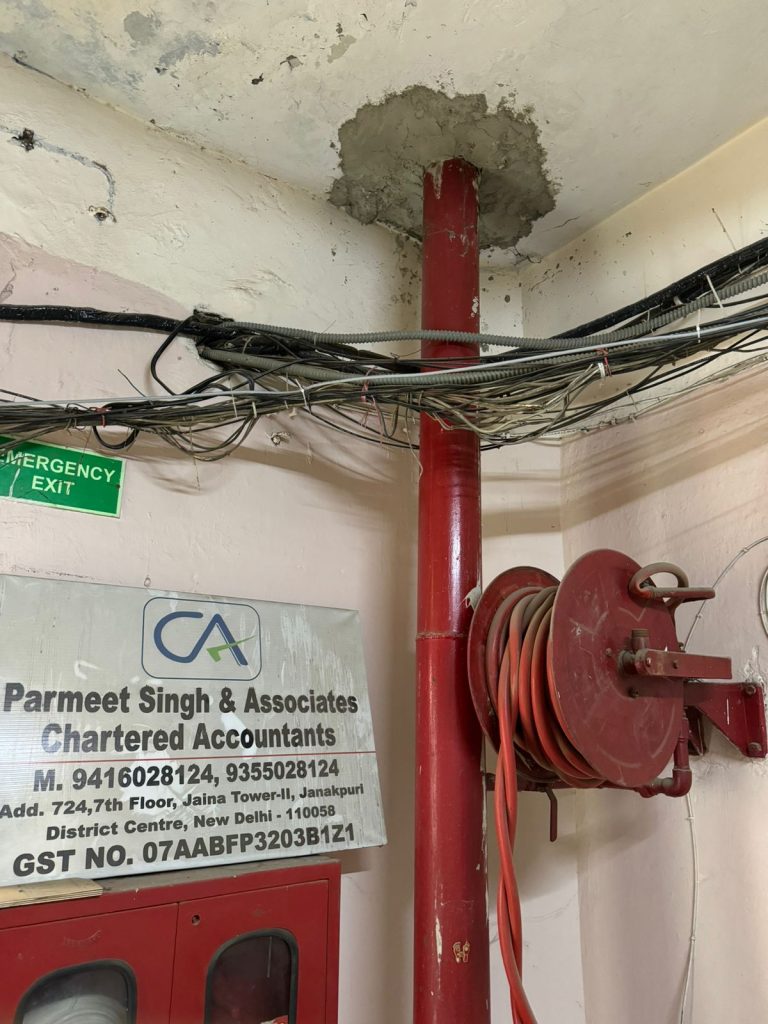
| Fig. | Photo (see gallery) | What You’re Looking At | Why It’s Dangerous |
|---|---|---|---|
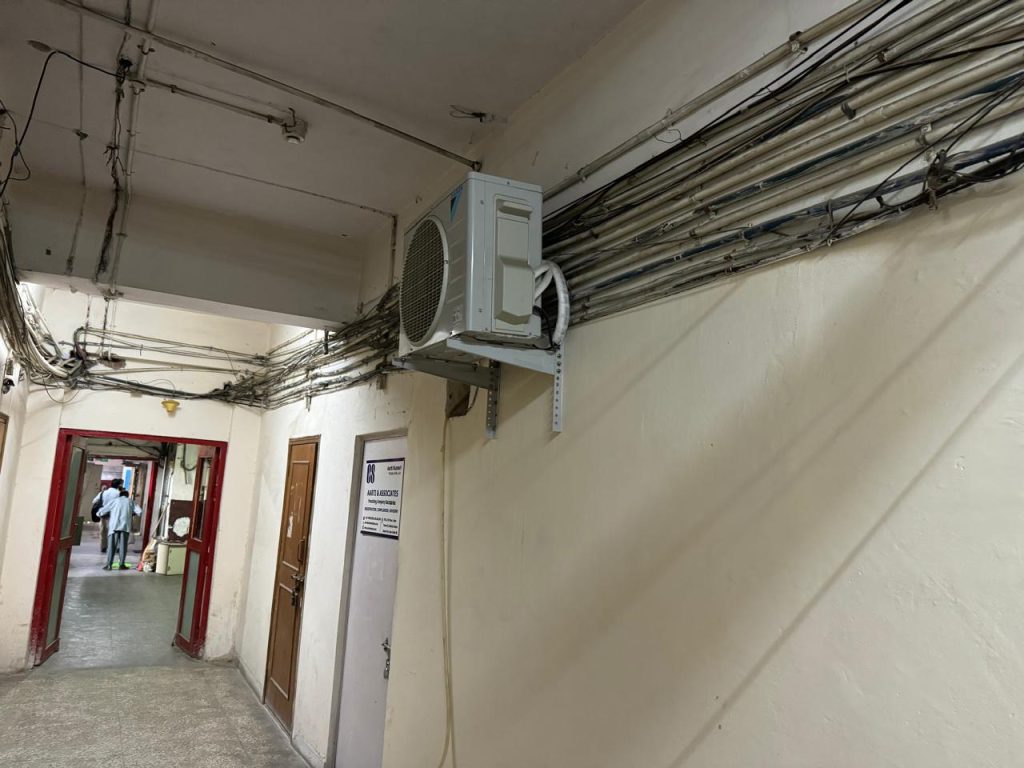
| 1 | WA0043.jpg | Outdoor A/C condenser hung in the public corridor amid a jungle of surface-mounted cables. | Narrows the minimum clear width of the only egress path; condenser oil & vibration are ignition sources. |
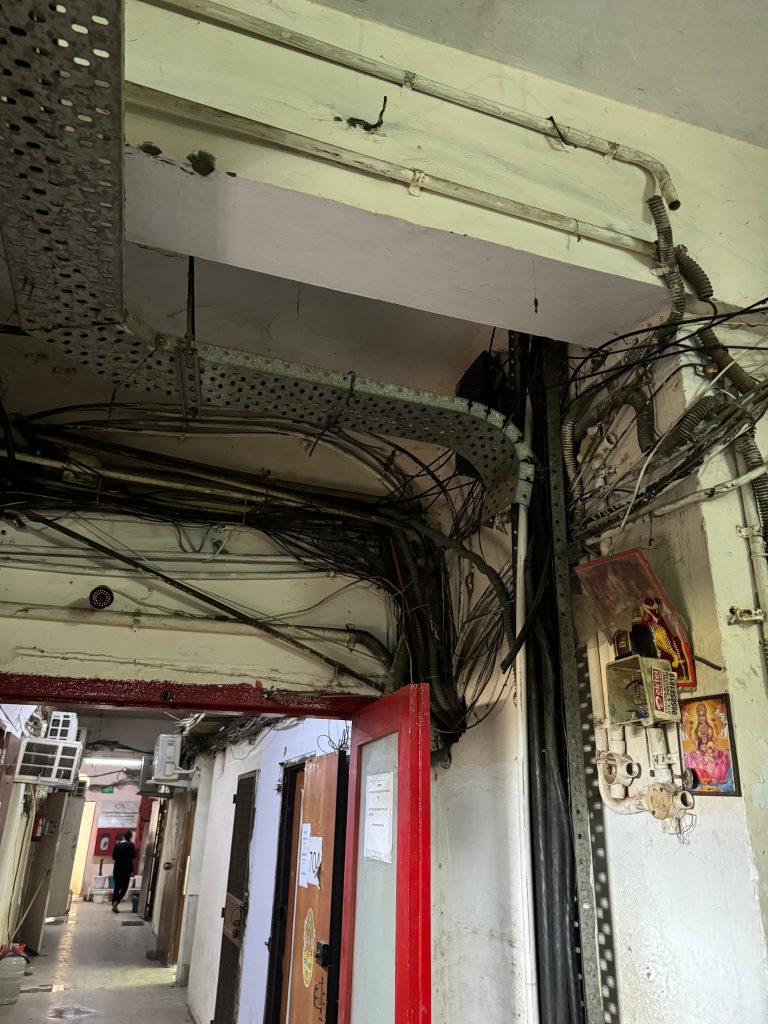
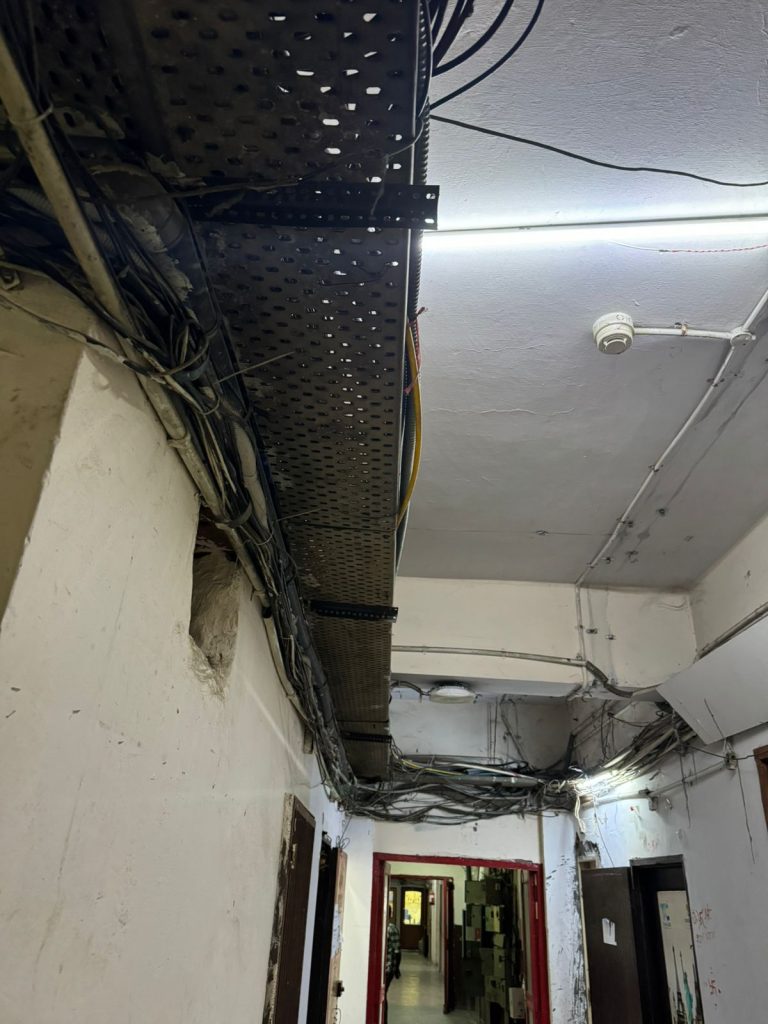
| 2 | WA0019.jpg | Improvised perforated tray overloaded with mixed-voltage cables; poor terminations. | No fire-rated enclosure; sparks or overheating could flash-over in minutes. |
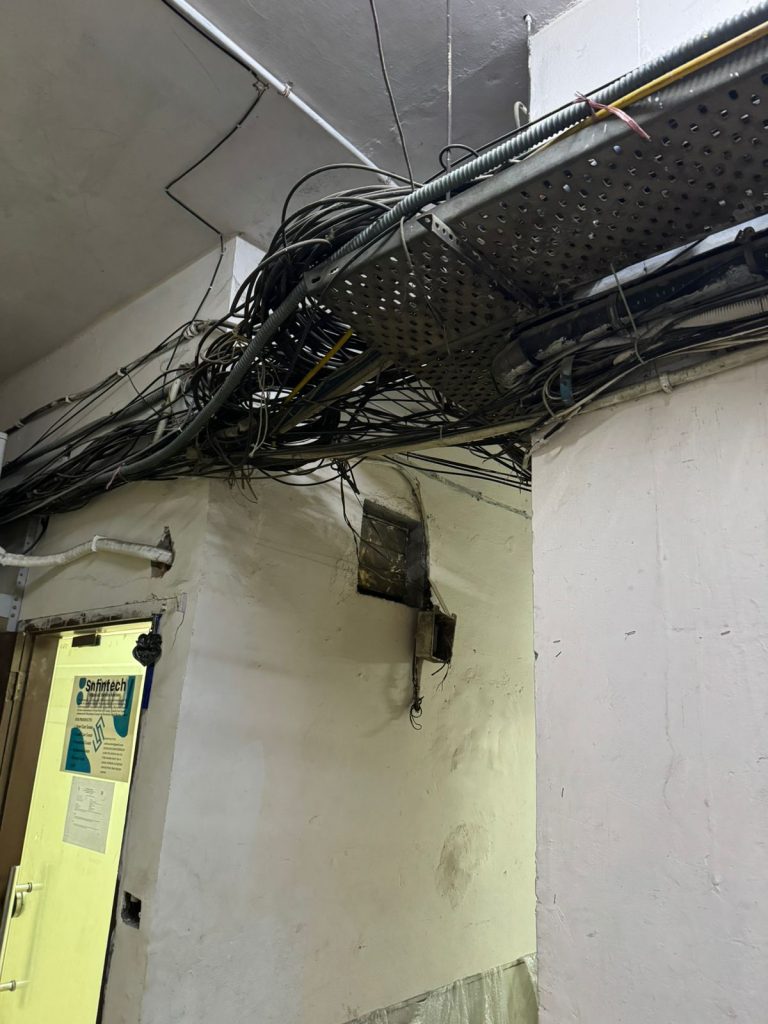
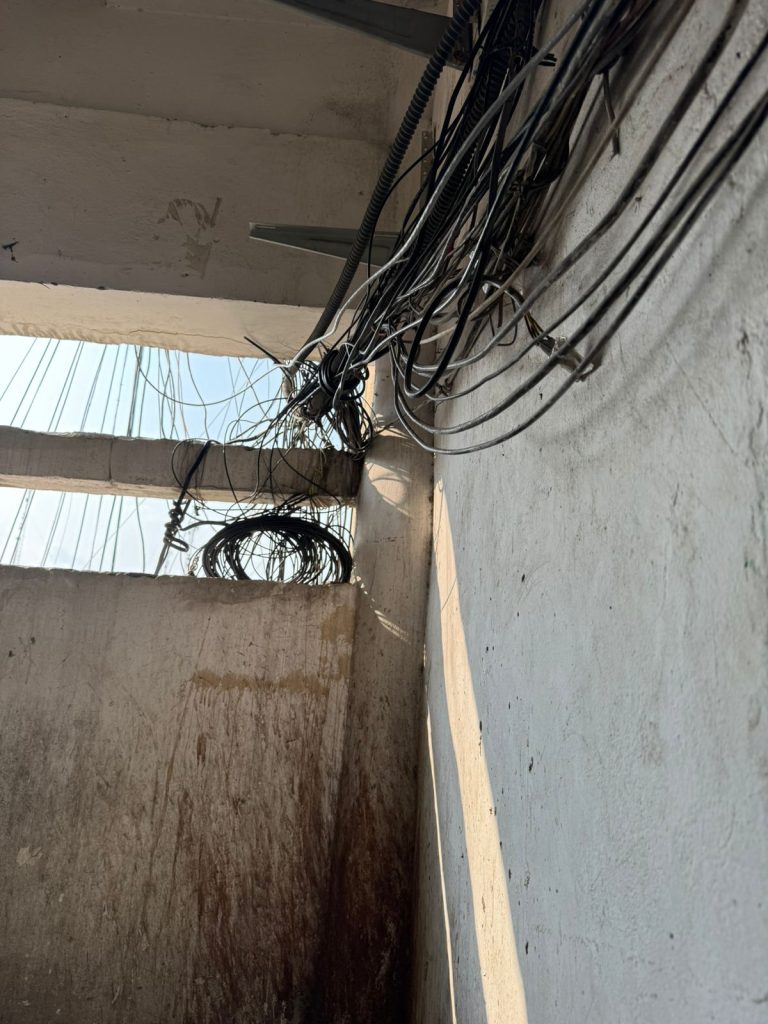
| 3 | WA0022.jpg | Loose cable loops stuffed into a wall chase; open junction box dangling. | Mechanical damage & arcing risk; impossible to isolate in emergency. |
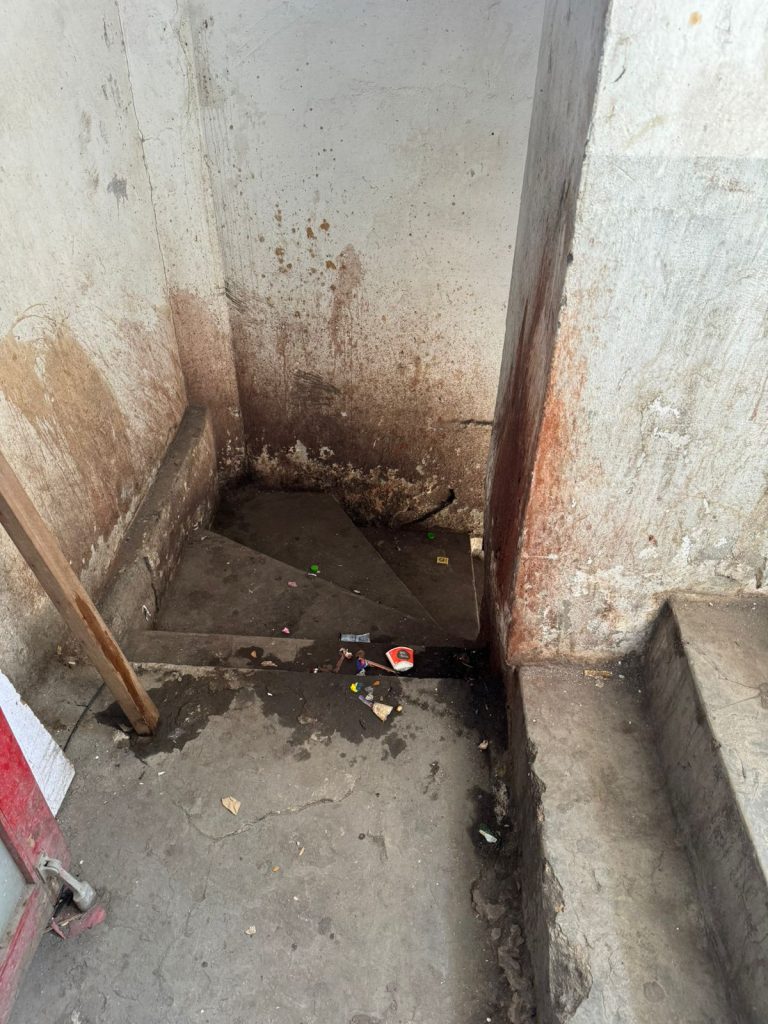
| 4 | WA0024.jpg | Service stairwell coated in grime, broken step nosings, pooled water and litter. | Slips, trips, and blocked evacuation—especially in low-visibility smoke. |
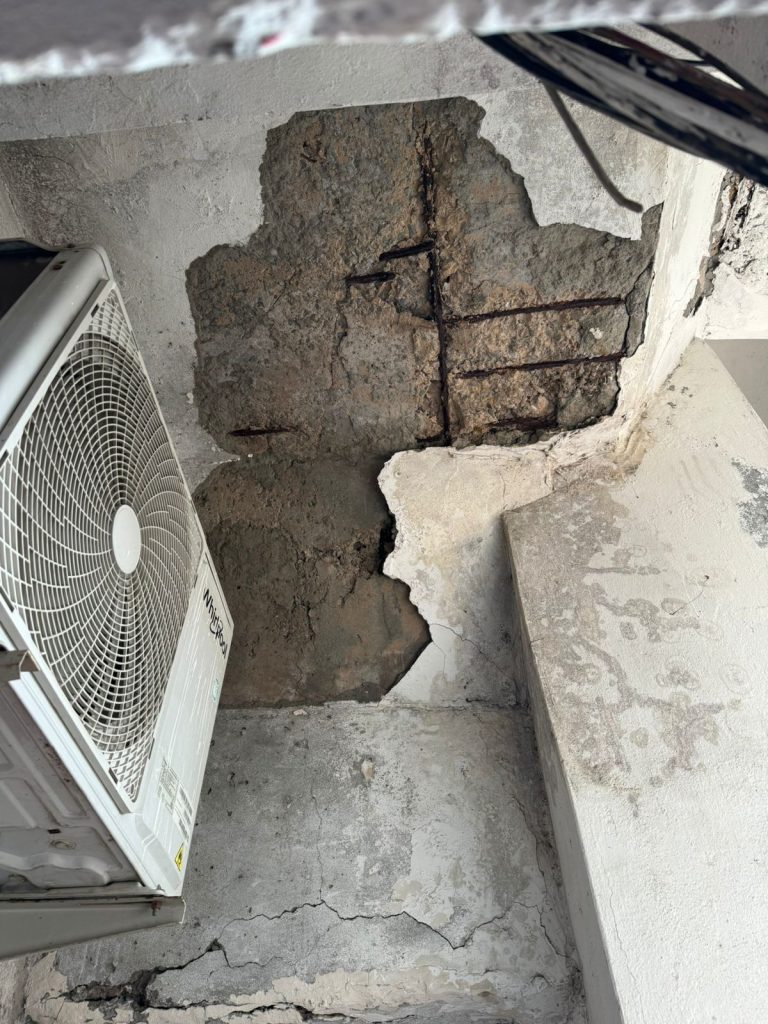
| 5 | WA0025.jpg | Ceiling concrete spalling; corroded reinforcement visible next to an A/C unit. | Signals structural distress and potential loss of cover to fire. |
| 6 | WA0026.jpg | Exterior light-well: rainwater stains + spaghetti of unprotected data/power cables. | Water + electricity = shock and short-circuit fire hazard. |
| 7 | WA0027.jpg | Fire-hose riser passes through slab patch; same corner crammed with live cables. | Compromises both passive (compartmentation) and active (hydrant) fire systems. |
| 8 | WA0032.jpg | Corridor intersected by two overloaded cable trays; exit doorframe cut back to fit. | Physical obstruction of exit access; violates clear-height & width norms. |
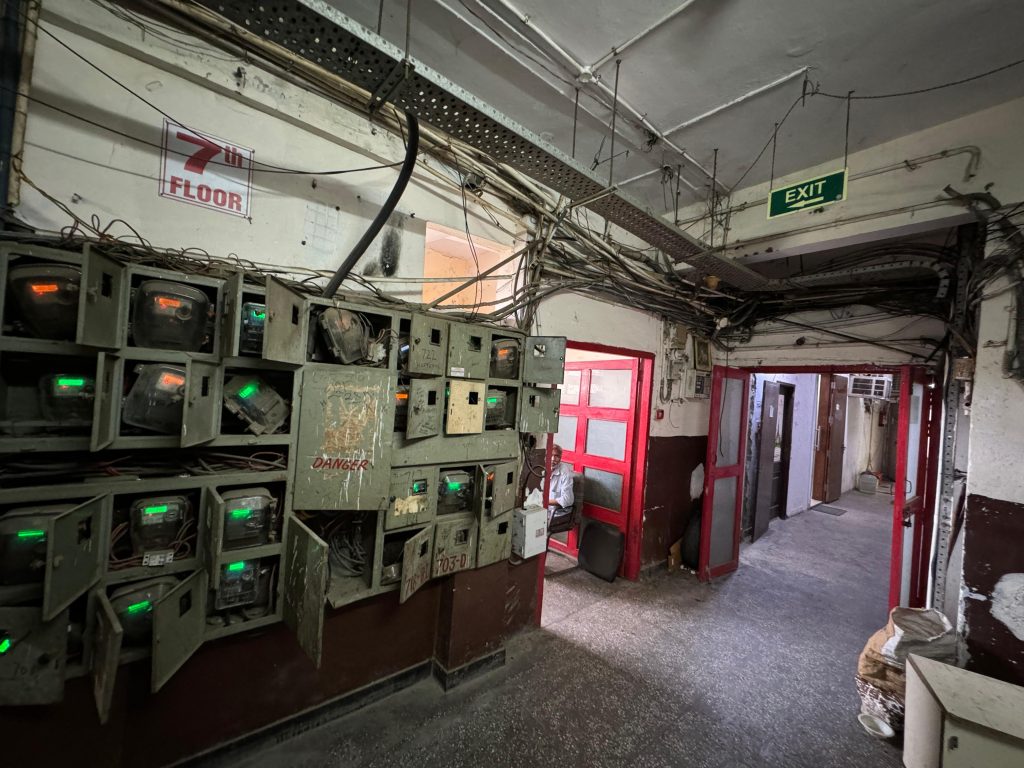
| 9 | WA0038.jpg | Bank of 7th-floor electricity meters with doors missing, live parts exposed. | Direct electrocution hazard; sparks can ignite nearby combustibles. |
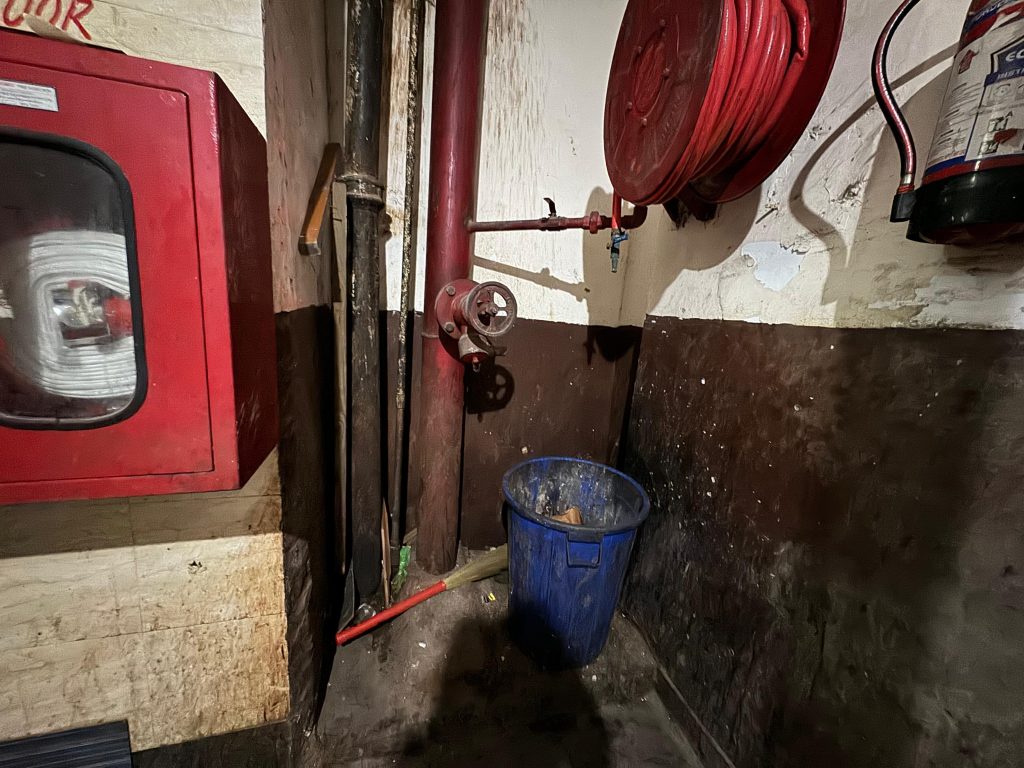
| 10 | WA0039.jpg | Fire hose reel corner used as a dumping spot (bucket, loose tools). | Equipment likely non-functional or inaccessible during fire. |
3. How These Conditions Violate Indian Fire & Building Codes
- Exit width & obstruction – The National Building Code (NBC) 2016 demands that exit passageways for business/mercantile occupancies be at least 2 m wide, free of fixed obstructions.(Shubh Fire and Safety Equipments)
The A/C units, trays and dangling cables clearly narrow the only escape route below this threshold. - Unobstructed egress – NBC Part 4 §4.2.3 requires every exit and exit passageway to be “continuously maintained free of all obstructions.”(Shubh Fire and Safety Equipments)
- Fire-NOC & maintenance – The Delhi Fire Service Act 2007 and Delhi Fire Service Rules 2010 empower the CFO to penalise buildings that impede fire-safety systems or operate without a valid Fire-NOC.(Corpbiz)
- Electrical safety – Open meter boards, exposed conductors and mixed-voltage bundles contravene Central Electricity Authority (Measures relating to Safety and Electric Supply) Regulations 2010, which require live parts to be enclosed.
4. Potential Consequences
- Rapid fire spread through combustible cable insulation in an already constricted corridor.
- Smoke-choked evacuation as obstructions slow escape below the 2½-minute safe-egress benchmark.
- Structural failure if rebar corrosion undermines slab integrity, dropping debris or equipment.
- Regulatory closure: DFS can seal premises or levy daily fines until compliance is proven.
5. Immediate Corrective Actions
| Priority | Action Item | Responsible |
|---|---|---|
| High | Remove all non-fire-rated obstacles (A/C condensers, loose cable loops) from corridors and stairwells. | Building Management + Tenants |
| High | Enclose meter bank in a lockable, metal, ventilated cabinet; label circuits. | Electrical Contractor |
| High | Commission a certified structural audit of spalled slabs and beams; carry out RCC repairs with epoxy-bonded patching. | Structural Engineer |
| Medium | Reroute data & power cables into fire-rated GI conduits or 2-hour-rated shafts; segregate LV/HV runs. | Licensed Electrician |
| Medium | Service and tag every hydrant, hose reel and extinguisher; keep 1 m clearance zone. | Fire-Safety Vendor |
| Low | Daily housekeeping checklist for stairwells and refuge areas. | Facility Staff |
6. Call to Action
If you occupy or visit Jaina Tower II:
- Document —Take photos (time-stamped) of any new hazards.
- Report —File a written complaint with the Delhi Fire Service and the DDA Building Section.
- Insist —Demand that the managing committee display a valid Fire-NOC and structural stability certificate in the lobby.
Lives depend on prompt compliance. Let’s ensure Jaina Tower II is a place of business—not a disaster waiting to happen.