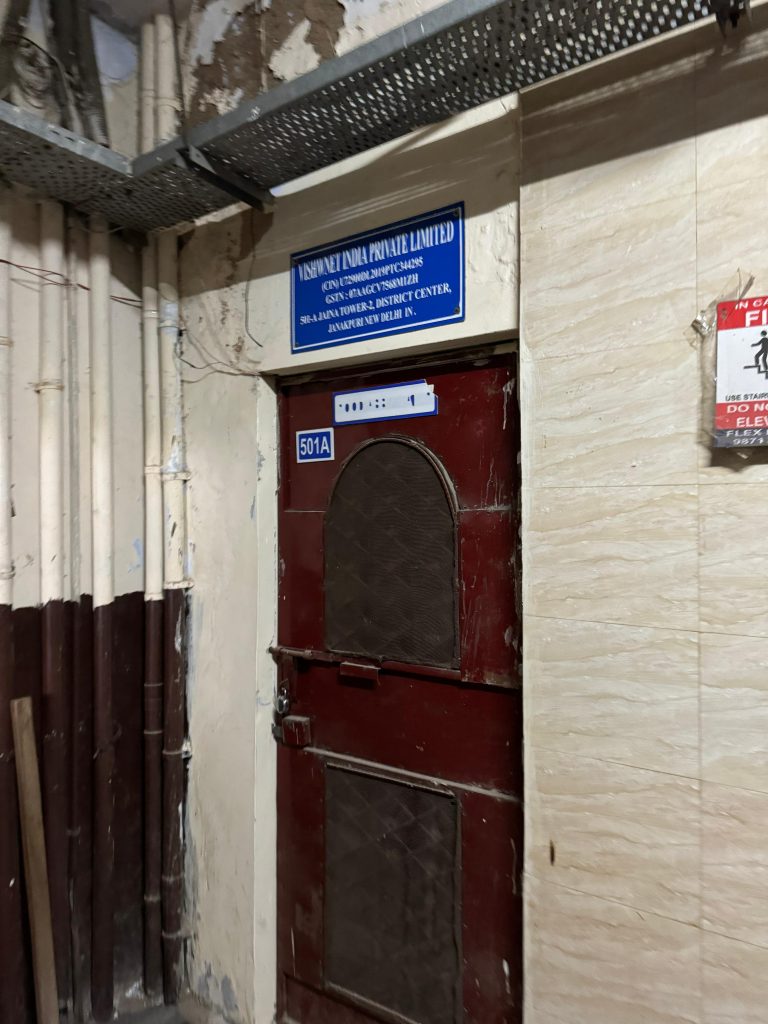
1. What the camera captures
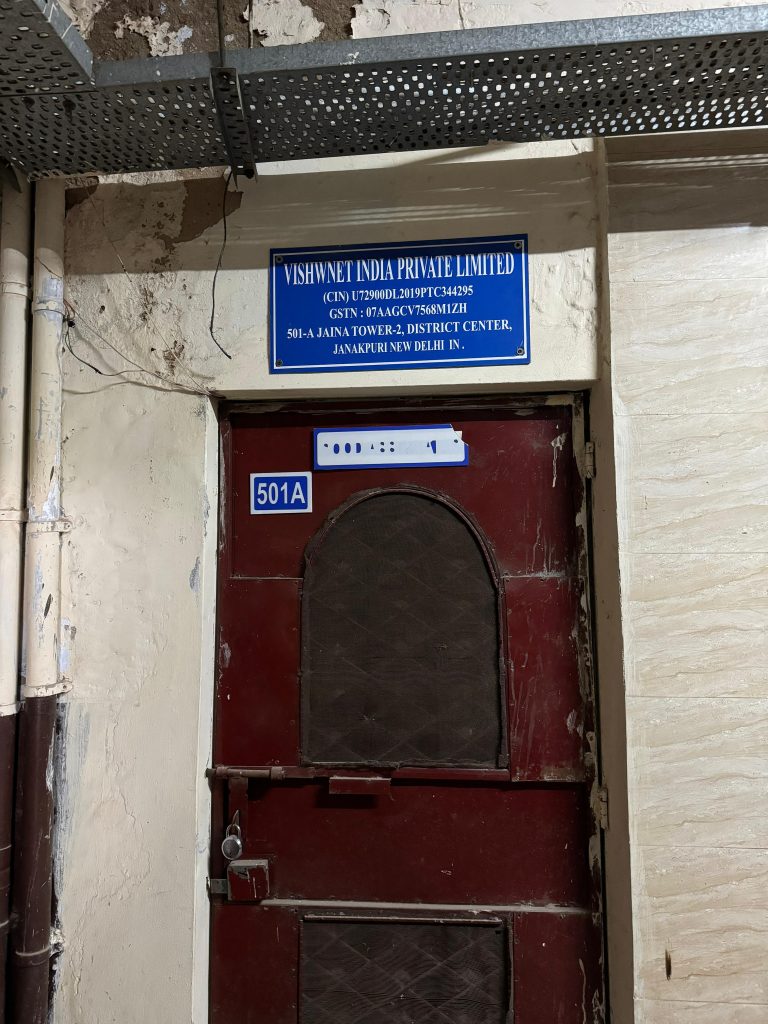
- A lift lobby that never got its lift: The doorway labelled 501 A sits exactly where the approved plans earmark a lift well. A private company, Vishvnet India Pvt Ltd, now occupies the void that should have moved hundreds of people vertically every day.
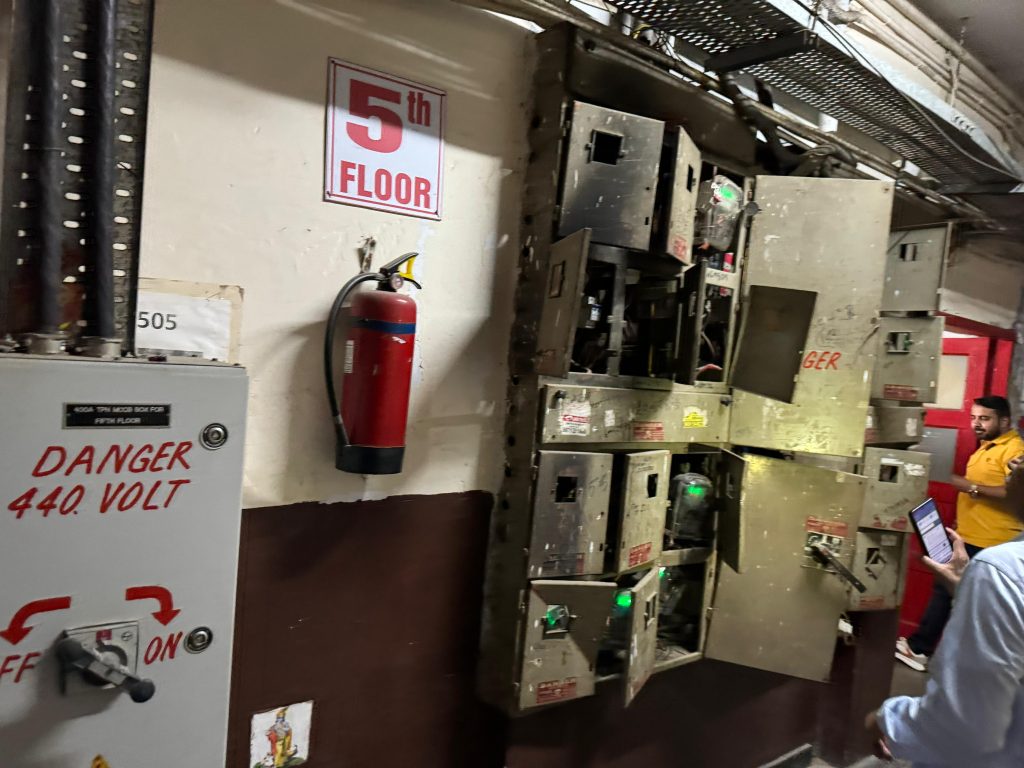
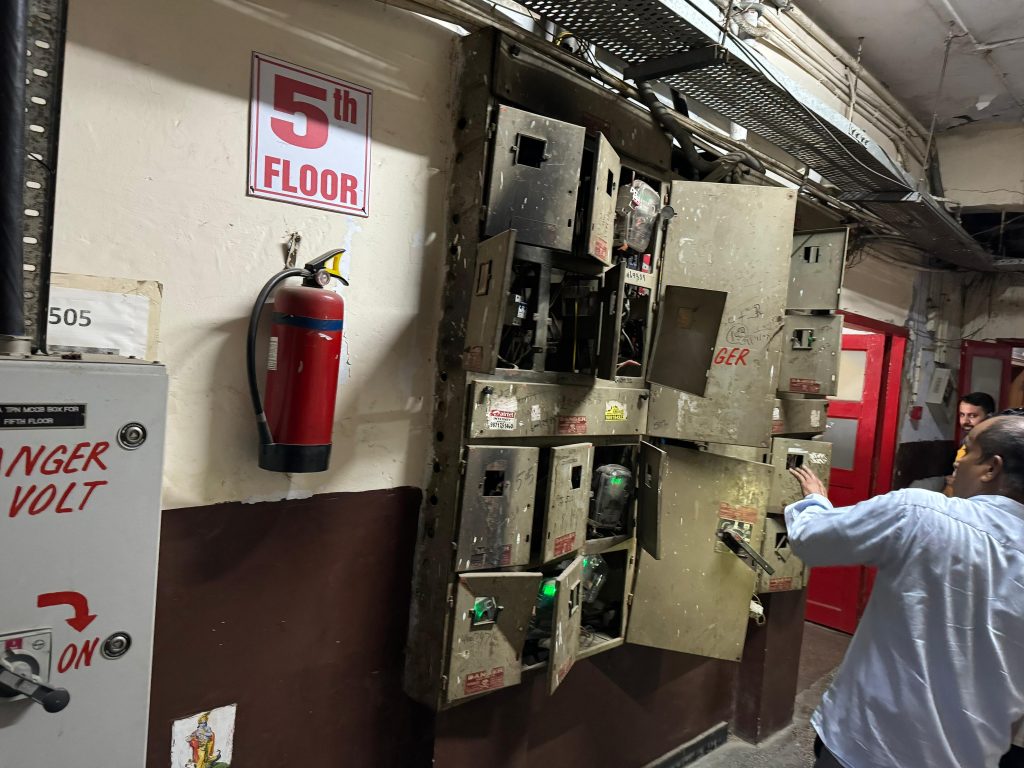
- Live power gear left open to the corridor: Right outside the door an entire bank of metal?clad switch-fuse units and MCB panels hangs open, some breakers glowing green, others missing covers altogether. A separate 440-volt isolator is only inches away, its handle within reach of a passer-by.
- A single extinguisher as token compliance: One dry-powder extinguisher is bolted to the wall, but the clearance around it is blocked by dangling panel doors—rendering it useless in an emergency.
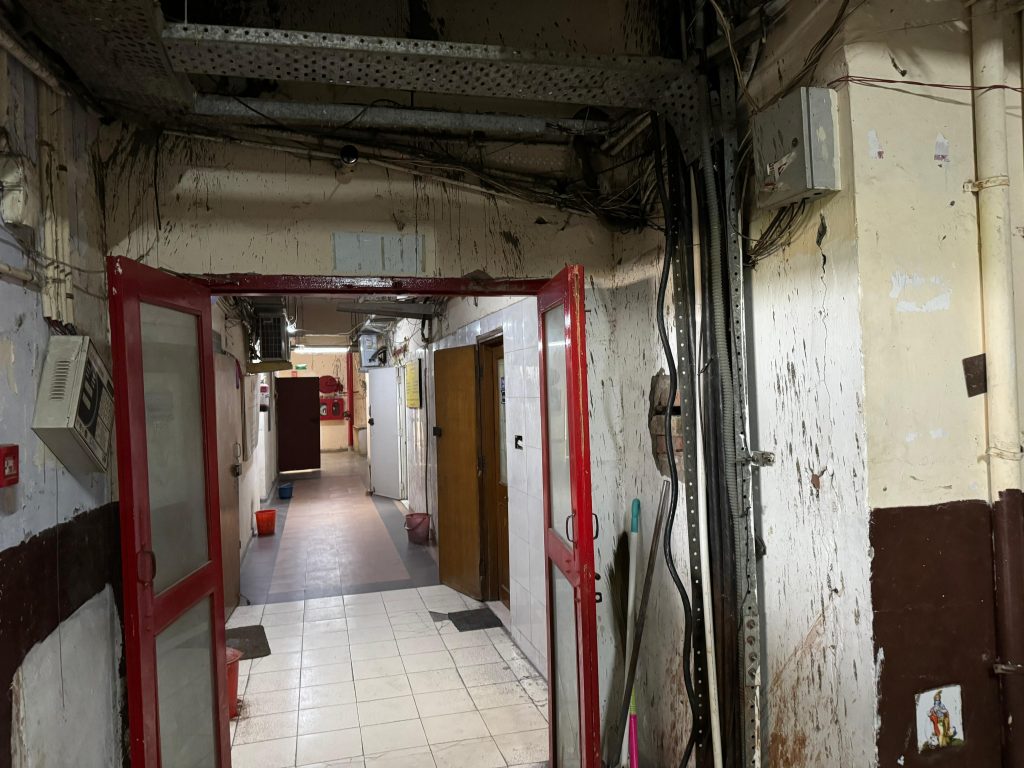
- Wiring spaghetti and water stains: Follow the corridor and the ceiling is streaked with seepage; bundles of unarmoured cables sag out of conduits and across perforated trays that were never earthed.
(Feel free to embed the wide-angle MCB shot here; it tells the story in one frame.)
2. Why this space should never have been sold or rented
| Regulation breached | What the rule says | How 501 A violates it |
|---|---|---|
| National Building Code, Part 8 (Vertical Transportation) | Every occupied floor above ground must be served by an approved passenger lift. | The designated lift well is sealed and repurposed as office space. |
| Delhi Fire Service Rules 2010 | Electrical switch-gear rooms must be fire-rated, locked, and isolated from escape routes. | Panels stand open in the common corridor; no fire-rated enclosure, no lock. |
| Delhi Electricity Act 2003 | Live parts must be inaccessible to the public; danger signs and interlocks mandatory. | Missing covers expose busbars; “Danger 440 V” notice is offset and ignored. |
| DDA Completion Certificate (1999) | Only floor layouts shown in sanctioned drawings may be occupied. | 501 A never existed on the approved fifth-floor plan. |
3. Compounded risks for everyone in the tower
- Blocked evacuation – When smoke builds, a lift lobby is a refuge zone; replacing it with a locked office forces occupants into a single narrow staircase.
- Flash-over potential – Exposed MCBs can arc; dust-laden corridors turn a minor short into a corridor fire.
- Zero insurance cover – Insurers routinely void policies where illegal alterations or unsafe electrical systems are documented.
- Personal criminal liability – Under Section 336 IPC, knowingly endangering human life through negligent construction is punishable by imprisonment.
4. What tenants, visitors, and neighbours can do now
- Document everything – Photograph the panel numbers, open doors, and any sparks/odours. Time-stamp your evidence.
- File an RTI with DDA & DFS – Ask for the sanctioned plan of the fifth floor and the latest fire-safety inspection notes.
- Serve a legal notice – Under Section 133 CrPC (public nuisance) you can demand the SDM issue directions to the builder/occupier.
- Push for immediate sealing – DFS can—and recently has—sealed electrical rooms in non-compliant commercial blocks. Collective resident petitions speed this up.
- Commission an independent safety audit – A certified electrical inspector’s report forces management to act or face statutory penalties.
5. The bigger pattern
Office 701 C (our July post) proved the builder’s habit of monetising lift shafts; Office 501 A shows it is systemic, not accidental. Each extra square foot sold equals another square foot of safety margin erased. Left unchecked, the tower lurches closer to the kind of corridor-flash fire we have already witnessed in similar Delhi high-rises.
Takeaway
A working lift can be repaired; a missing lift is a design failure. When that void is crammed with desks and live switch-gear, it becomes a death trap camouflaged as prime office real estate. If you work, shop, or even deliver parcels in Jaina Tower II, keep your exit routes in mind—and lend your voice to those demanding compliance before the next alarm rings.