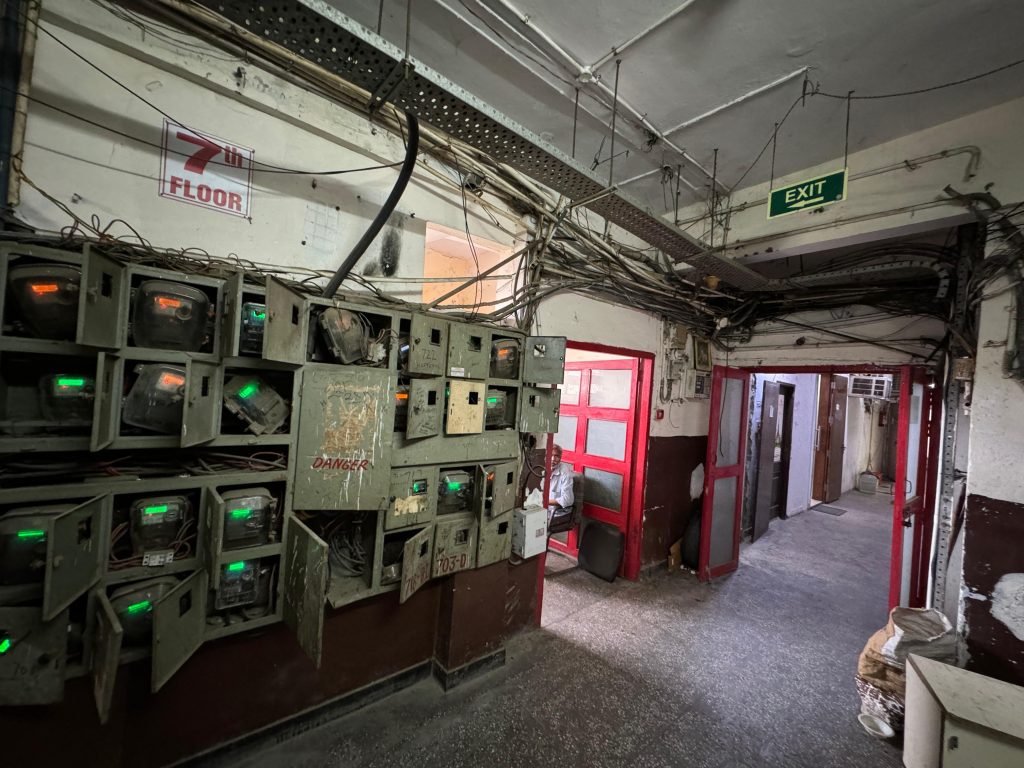
1. What’s Wrong Here?
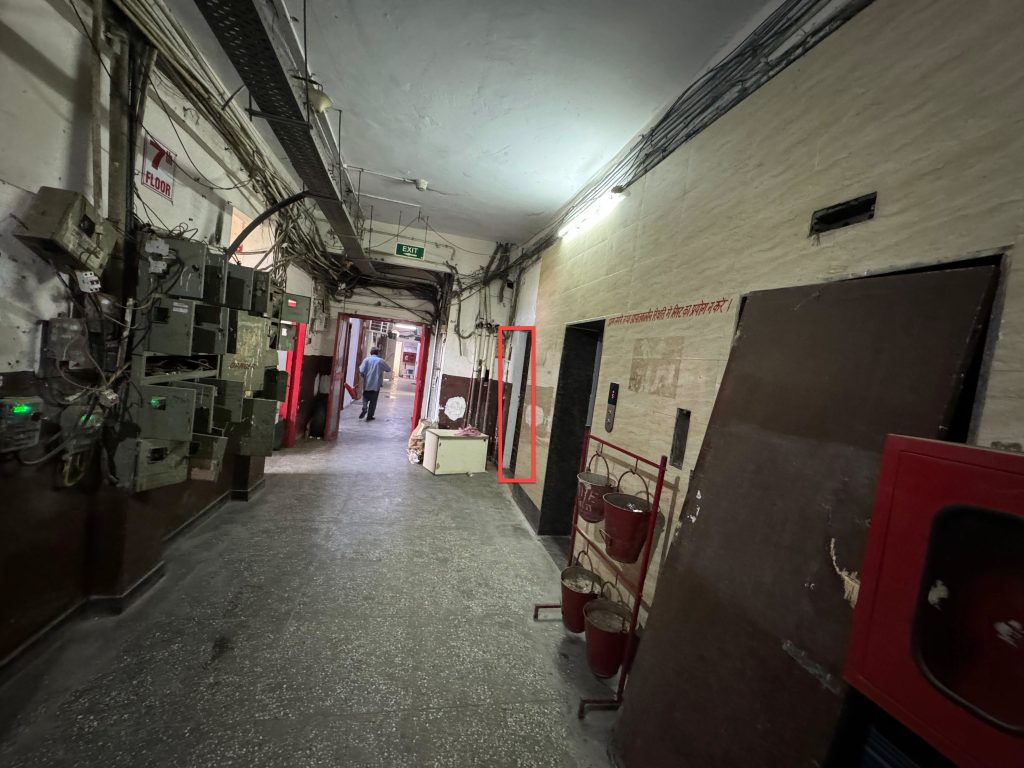
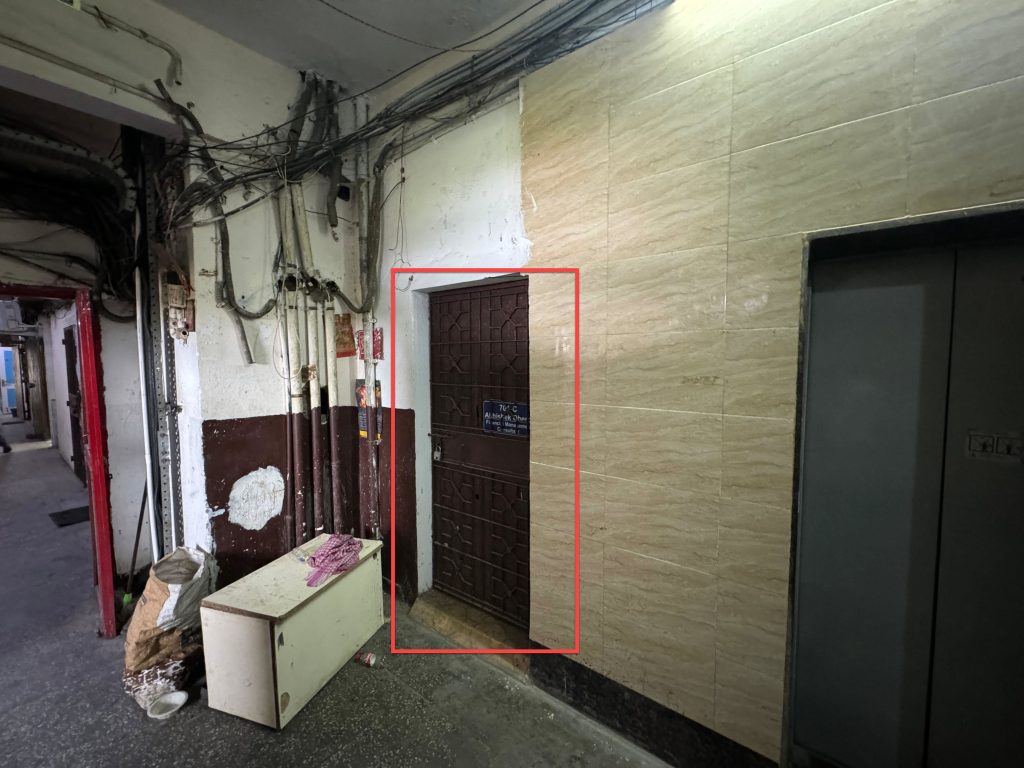
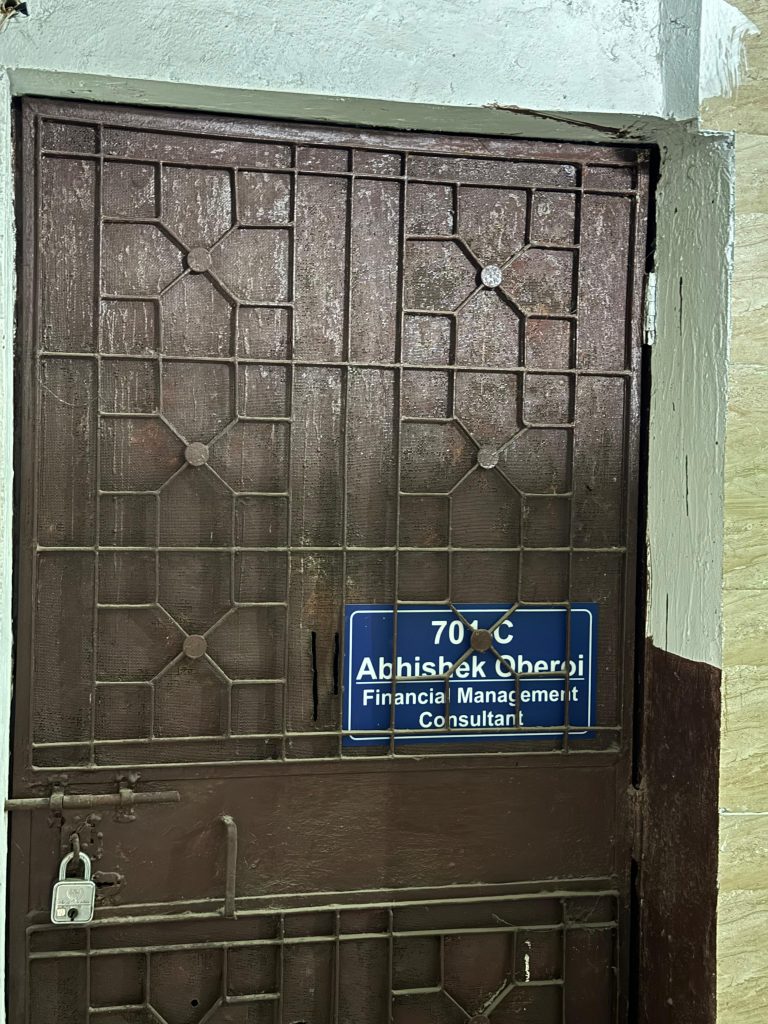
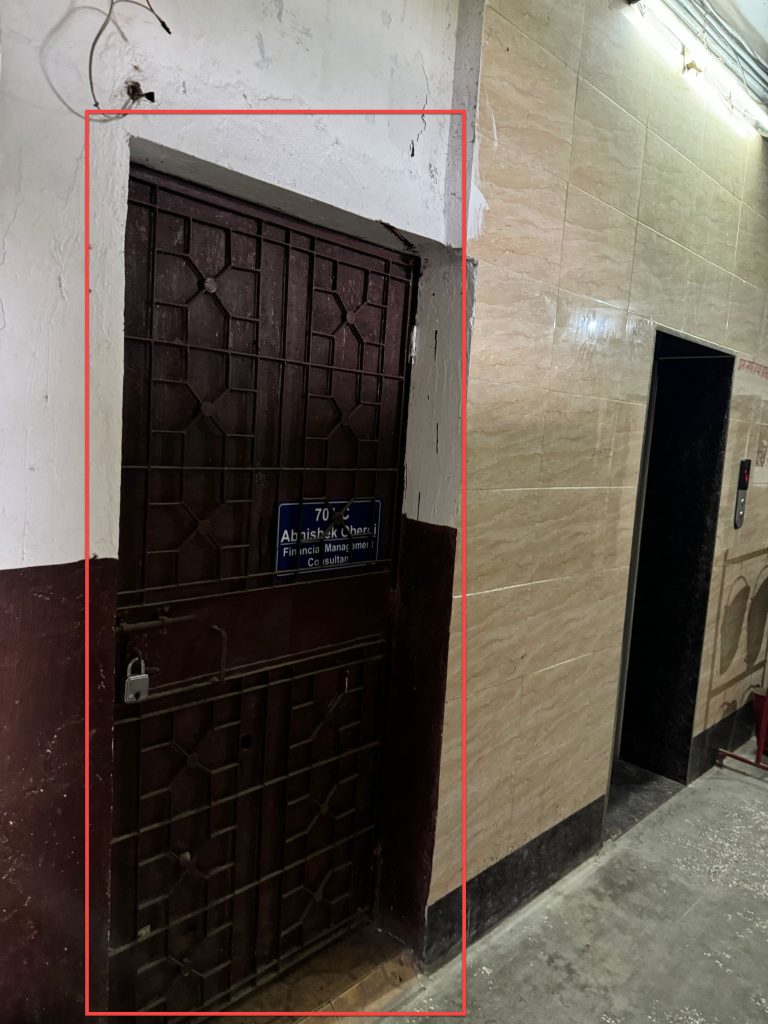
On paper, Jaina Tower II’s approved completion certificate shows a passenger lift serving every floor—including the 7??. In reality, a metal-grilled door now bears the board “701 C” where the lift car should open. A full-fledged office has swallowed the lift well.
This space was never meant for occupancy. It was designed as a critical vertical artery for moving people—especially the elderly, the disabled, or anyone in an emergency—safely up and down the building. Plugging that artery with masonry and office furniture triggers a domino-effect of risks.
2. Safety & Legal Red Flags
| Issue | Why It’s Dangerous | Typical Code / Certificate Requirement |
|---|---|---|
| Blocked escape & rescue route | Evacuation capacity drops; fire-fighters lose lift access for rescue / hose lines. | Every building plan cleared by DDA & DFS reserves shaft space and approach clearance for lifts. |
| No secondary egress for the floor | In a fire, smoke or structural failure could trap occupants in a single corridor. | National Building Code (NBC) mandates two independent exit routes when occupant load exceeds 30. |
| Structural overload | Lift walls are designed for vertical loads, not live loads plus partitions, file cabinets, AC units, etc. Hairline cracks already visible around the lintel indicate distress. | Any change of use inside a shaft requires fresh structural vetting and DDA sanction. |
| Electrical hazard cocktail | A bank of live meters, open MCB panels and spaghetti wiring sits directly opposite the former lift opening. Sparks + trapped corridor = flash-over risk. | Electrical rooms must be segregated, fire-rated, and have clear access?—?never facing a lift lobby. |
| Insurance nullification | Insurers may void fire or public-liability cover because the occupancy deviates from the completion certificate. | Policy fine-print ties coverage to approved building plans. |
| Accessibility violations | Persons with disabilities (PwD) now have no lift access from the 7?? floor, breaching equal-access laws. | Rights of Persons with Disabilities Act 2016 & NBC 2016, Part 9. |
| Criminal liability | Under Delhi Fire Service Act 2007, obstructing means of escape can attract fines and imprisonment for owners / occupiers. | DFS Form ‘B’ compliance requires unobstructed exits & lift shafts. |
3. Real-World Consequences We’ve Already Seen Elsewhere
- Fire spreads faster when corridors become dead-ends. In the 2019 Surat coaching-centre tragedy, a blocked staircase turned smoke into a death trap.
- Lift-shaft conversions collapse. A 2021 incident in Mumbai saw a DIY storeroom crash four storeys when corroded guide-rails finally gave way.
- Litigation snowballs. Occupants have sued builders for loss of life & property after illegal alterations voided insurance.
4. The Extra Danger of the Exposed Meter Bank
The photographs show:
- rusted, half-open meter boxes marked “DANGER”;
- loose neutral and phase conductors bundled over door heads;
- plastic conduit hanging free, likely PVC (emits toxic HCl in fire).
A single arc-flash could ignite cable insulation; with the lift lobby sealed off, radiant heat has nowhere to dissipate. Any occupants inside “701 C” or in the corridor would have seconds—not minutes—to escape.
5. How This Could Have Happened
| Stage | What Should Have Happened | What Likely Happened |
|---|---|---|
| Building plan approval | Lift shaft dimensions frozen; no alternate use allowed. | Approved as per plans. |
| Construction | Builder leaves shaft clear; DFS inspects before NOC. | Shaft built, but later bricked up post-inspection. |
| Completion certificate | DDA issues CC based on conformity. | CC shows lift; post-CC alterations never reported. |
| Ongoing audits | Annual DFS/NBC compliance checks. | Either skipped or violations ignored. |
6. What Needs to Be Done—Yesterday
- Immediate sealing & vacating of “701 C”. Occupancy certificate is void in that space.
- Structural audit to assess damage to guide-rails, counterweight pits, and cross-beams.
- Electrical re-routing: shift the meter/MCB bank to a fire-rated service room with metal-clad cabling.
- Restore lift service or, at minimum, reopen the shaft as a natural smoke vent until full restoration.
- Report to regulators: DDA, Delhi Fire Service, and the local electricity distribution company. Failing to notify can attract both civil penalties and criminal charges.
- Resident awareness drive so occupants know evacuation routes are compromised and can lobby collectively.
7. Final Thoughts
A lift well is not spare real estate; it is life-safety infrastructure. Converting it into Office 701 C trades a few square metres of rent for structural uncertainty, fire risk, and legal jeopardy for every person in Jaina Tower II. The exposed forest of meters and live cabling outside only fans the flames—literally.
Until the shaft is reinstated and the electrical hazards removed, the seventh floor sits on a powder keg. The question is not if something could go wrong, but when—and how many lives it will endanger when it does.